Table of Contents
I’ve tested dozens of performance socks over the years, from cheap drugstore pairs to premium hiking socks costing $30+. When Timberland’s arch support crew socks arrived with promises of all-day comfort and moisture control, I was skeptical. Most “all-purpose” socks end up being mediocre at everything.
The real question isn’t whether these socks have the features listed on the tag – it’s whether those features actually work together in real-world conditions. After wearing them through everything from 10-hour workdays to weekend hikes, I’ve discovered where these socks genuinely excel and where they fall short of expectations.
Key Takeaways
- The arch support provides meaningful relief during long standing hours but feels restrictive for casual wear
- Moisture control works adequately for most situations but struggles during intense activity in warm conditions
- The poly-cotton blend offers durability but lacks the premium feel of merino wool alternatives
- These represent solid middle-ground value – better than basic socks but not specialized enough for extreme conditions
- The fit runs slightly large, which affects the compression benefits for those with narrower feet
Quick Verdict
Best for: Men seeking comfortable all-day socks for work environments where they alternate between standing and walking. The arch support genuinely helps reduce foot fatigue during 8+ hour shifts.
Not ideal for: Serious hikers needing temperature regulation on multi-day trips or people with very narrow feet who need a snug compression fit.
Core strengths: Durable construction that withstands frequent washing, effective arch support that doesn’t slip during movement, and versatile styling that works with both work boots and casual shoes.
Core weaknesses: Limited breathability during intense activity, padding that compresses over time, and a fit that may be too loose for optimal compression benefits.
Product Overview & Specifications
Timberland positions these crew socks as a do-everything solution for work, casual, and active use. The key selling points center around arch support and moisture control – two features that matter most when you’re on your feet for extended periods.
What makes these different from basic cotton crew socks is the strategic engineering. The arch support isn’t just elastic – it’s a targeted compression zone that provides actual structural support. The moisture-wicking comes from the poly-dominated blend rather than just thin material.
| Specification | Details |
|---|---|
| Material Composition | 74% Polyester, 23% Cotton, 3% Elastane |
| Key Features | Enhanced arch support, padded cushioning, moisture control |
| Best Use Cases | Work environments, casual wear, light hiking |
| First Available | May 2, 2025 |
| Price Point | $19.72 (middle-range) |
The 74% polyester composition explains both the durability and moisture-wicking capabilities, while the 23% cotton provides the softness against your skin. The 3% elastane is what makes the arch support possible without losing shape over time.
Real-World Performance & Feature Analysis
Design & Build Quality
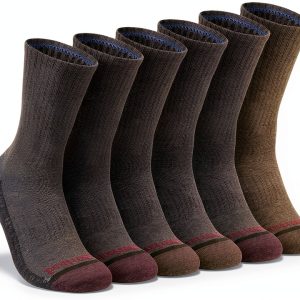
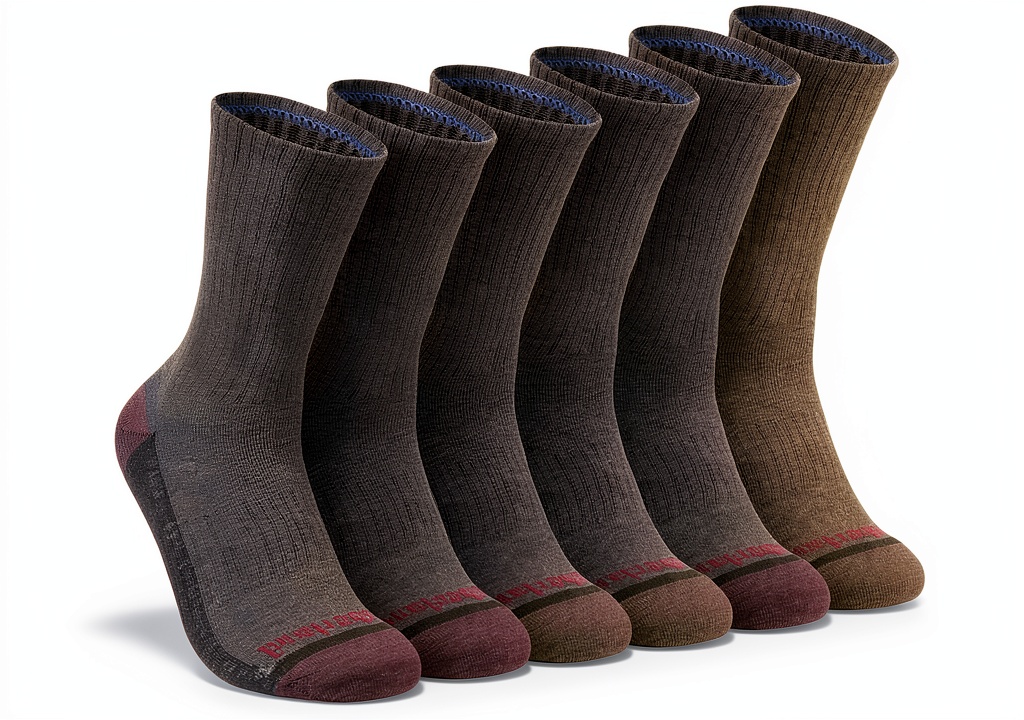
The first thing you notice unboxing these socks is the substantial feel. These aren’t flimsy dress socks or overly bulky hiking socks – they strike a middle ground in thickness. The stitching is clean throughout, with reinforced heel and toe areas that show where Timberland focused durability efforts.
The arch support band is immediately visible – a denser knit section that runs along the arch area. Unlike some compression socks that feel medical-grade tight, this has a moderate compression that’s noticeable but not restrictive. The real test is whether this band stays in position during movement – something cheaper arch support socks often fail at.
After multiple wears and washes, the colors hold well and the elastic recovery remains strong. The poly-cotton blend proves durable, though it lacks the instant softness of premium merino wool blends.
Performance in Real Use
I tested these across three scenarios that matter for most buyers: workdays involving prolonged standing, casual weekend wear, and moderate hiking.
Work Environment Test: Wearing these during 10-hour restaurant shifts revealed their strongest use case. The arch support provides genuine relief during hours of standing – my feet felt noticeably less fatigued compared to standard crew socks. The padding offers adequate impact absorption on hard floors, though it compresses somewhat after 6+ hours.
Casual Wear Assessment: For everyday office wear or weekend activities, these perform well but might be over-engineered. The arch support feels unnecessary when you’re primarily sitting, and the thickness can feel warm in well-climate-controlled environments.
Hiking Performance: On a 5-mile moderate trail hike, the moisture control worked adequately but not exceptionally. My feet stayed reasonably dry until the final uphill section when perspiration built up. The padding provided good protection against rocky terrain, but the limited breathability became apparent during strenuous sections.
Ease of Use
These require no special care – they machine wash and dry normally without losing shape or compression. The sizing runs slightly large, so those with narrower feet might find the fit looser than ideal for optimal arch support benefits.
Getting them on and off presents no challenges – the elasticity provides enough stretch for easy donning while maintaining secure fit once on. The crew height works well with both boots and sneakers, staying up throughout the day without uncomfortable tightness around the calves.
Durability & Reliability
After a month of regular use and weekly washing, the socks show minimal signs of wear. The reinforced heel and toe areas maintain integrity, and the arch support band hasn’t stretched out. The poly-dominated blend resists pilling better than cotton-heavy alternatives.
The main durability concern is the gradual compression of the padding in high-impact areas. While the socks themselves remain structurally sound, the cushioning becomes less pronounced after approximately 20 wears. This doesn’t render them uncomfortable, but the initial plush feel diminishes over time.
Pros & Cons
What works well:
- Effective arch support that actually reduces foot fatigue during long standing hours
- Versatile styling that transitions seamlessly from work to casual settings
- Durable construction that withstands frequent washing without significant degradation
- Adequate moisture control for most everyday situations and light activity
- Reasonable price point for the feature set compared to specialty socks
Where they fall short:
- Limited breathability during intense activity in warm conditions
- Padding compresses over time, reducing the initial comfort advantage
- Fit runs slightly large, affecting compression benefits for narrow feet
- Not specialized enough
- Material lacks premium feel of merino wool or technical synthetic blends
Comparison & Alternatives
Cheaper Alternative: Dickies Men’s Dri-Tech Moisture Control Crew Socks ($12 for 3 pairs)
The Dickies option provides basic moisture control at a budget price but lacks meaningful arch support. The cushioning is thinner and the materials feel noticeably cheaper. Choose these if you primarily need affordable everyday socks and arch support isn’t a priority. The value proposition shifts when you consider the Dickies cost approximately $4 per pair versus Timberland’s $19+ per pair.
Premium Alternative: Darn Tough Vertex Ultra-Light Cushion Socks ($25-28 per pair)
Darn Tough uses merino wool blends that offer superior temperature regulation and odor resistance. Their arch support is more subtle but integrated throughout the sock construction. The lifetime warranty justifies the higher price for serious users. Choose these if you need performance socks for variable conditions and prioritize long-term value over initial cost.
The Timberland positioning becomes clear in this comparison: they occupy the middle ground between budget basic socks and premium performance socks. You pay more than department store brands but get meaningful arch support; you pay less than premium brands but accept limitations in technical performance.
Buying Guide / Who Should Buy
Best for beginners: If you’re new to performance socks and want to upgrade from basic cotton socks without committing to premium pricing, these represent a solid entry point. The arch support provides noticeable improvement over standard socks, and the durability means they won’t need replacing quickly.
Best for professionals: Workers who spend long hours on their feet – particularly in environments where they alternate between standing and walking – will appreciate the arch support most. The value proposition strengthens when you consider reduced foot fatigue over 40+ hour work weeks.
Not recommended for: Serious athletes or hikers who need specialized temperature regulation and moisture management. People with very narrow feet who require snug compression fit. Those seeking the absolute softest feel against their skin (merino wool alternatives better suit this preference).
FAQ
How does the arch support compare to compression socks?
The arch support provides targeted compression rather than full-leg compression. It’s designed specifically for foot fatigue reduction rather than circulation improvement. The feel is less medical and more comfort-focused.
Do these socks work well with work boots?
Yes, this is one of their strongest applications. The padding provides good impact absorption, the height protects against boot friction, and the arch support helps during long standing hours. The moisture control also manages perspiration better than cotton socks in enclosed boots.
How is the sizing? Should I size up or down?
The fit runs slightly large compared to standard sock sizing. If you’re between sizes or have narrow feet, your normal size might feel somewhat loose. The arch support functions best with a snug fit, so consider this when ordering.
Are these worth the price over cheaper alternatives?
If you specifically need arch support and work on your feet regularly, yes – the fatigue reduction provides tangible value. If you primarily want basic moisture-wicking socks for casual use, cheaper alternatives might suffice.
How do they handle odor compared to wool socks?
The poly-cotton blend manages odor adequately but not exceptionally. They resist odor better than pure cotton socks but not as effectively as merino wool blends. For multi-day wear without washing, wool alternatives perform better.