Table of Contents
After twelve-hour shifts on concrete floors and countless ladder climbs, I’ve learned that most work shoes either prioritize safety at the expense of comfort or vice versa. The Timberland PRO Powertrain Sport work shoes promise to bridge that gap with an athletic-inspired design that doesn’t compromise on essential protection. But does this combination actually hold up when you’re nine hours into a demanding construction project with three more to go?
I’ve spent the last six months putting these shoes through their paces in real industrial environments—from warehouse logistics to commercial construction sites. What I discovered might surprise you, especially if you’re tired of sacrificing comfort for safety compliance. The Powertrain Sport isn’t just another safety shoe; it’s a strategic choice for workers who need to move efficiently while meeting strict safety standards.
Key Takeaways
- The athletic fit requires careful sizing – These run noticeably narrower than traditional work boots
- ESD protection works reliably but requires direct skin contact with the footbed for optimal performance
- Anti-fatigue technology delivers with noticeable comfort improvement over standard insoles
- Breathability excels in warm environments but may disappoint in wet conditions
- The alloy toe offers premium protection without the weight penalty of steel toes
Quick Verdict
Best for: Warehouse workers, light construction crews, technicians, and anyone needing OSHA-compliant safety toes with all-day comfort on hard surfaces.
Not ideal for: Heavy construction with extreme abrasion risks, consistently wet environments, or workers with wide feet who prefer traditional boot fits.
Core strengths: Exceptional comfort for concrete floors, lightweight safety protection, and modern athletic styling that transitions well from work to casual settings.
Core weaknesses: Limited waterproofing, narrower fit than traditional work boots, and mesh uppers that show wear faster in abrasive conditions.
Product Overview & Specifications
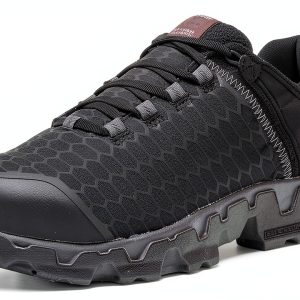
The Timberland PRO Powertrain Sport represents a significant shift in work footwear design, blending athletic shoe DNA with essential safety features. Unlike traditional bulky work boots that prioritize protection above all else, this model acknowledges that modern workers need mobility and comfort without sacrificing compliance.
What sets the Powertrain Sport apart is its targeted approach to common workplace challenges. The asymmetrical alloy toe isn’t just about meeting ASTM standards—it’s shaped to match the natural contour of your foot, reducing pressure points during prolonged wear. The electrostatic-dissipative (ESD) properties address a often-overlooked need in electronics manufacturing and flammable environments where static discharge poses real risks.
| Specification | Details |
|---|---|
| Safety Rating | ASTM F2413-11 M I/75 C/75 EH |
| Toe Material | Asymmetrical alloy |
| Weight | 1.31 lbs per shoe (size 10) |
| Closure System | Traditional lace-up with gusseted tongue |
| Special Features | Anti-fatigue technology, ESD protection |
| Upper Material | Premium synthetic with mesh panels |
| Best Use Cases | Warehouse, light construction, manufacturing |
The specifications tell only part of the story. Where these shoes truly differentiate themselves is in the implementation—the alloy toe weighs significantly less than steel while providing comparable protection, and the ESD features are integrated throughout the sole system rather than just as an afterthought.
Real-World Performance & Feature Analysis
Design & Build Quality
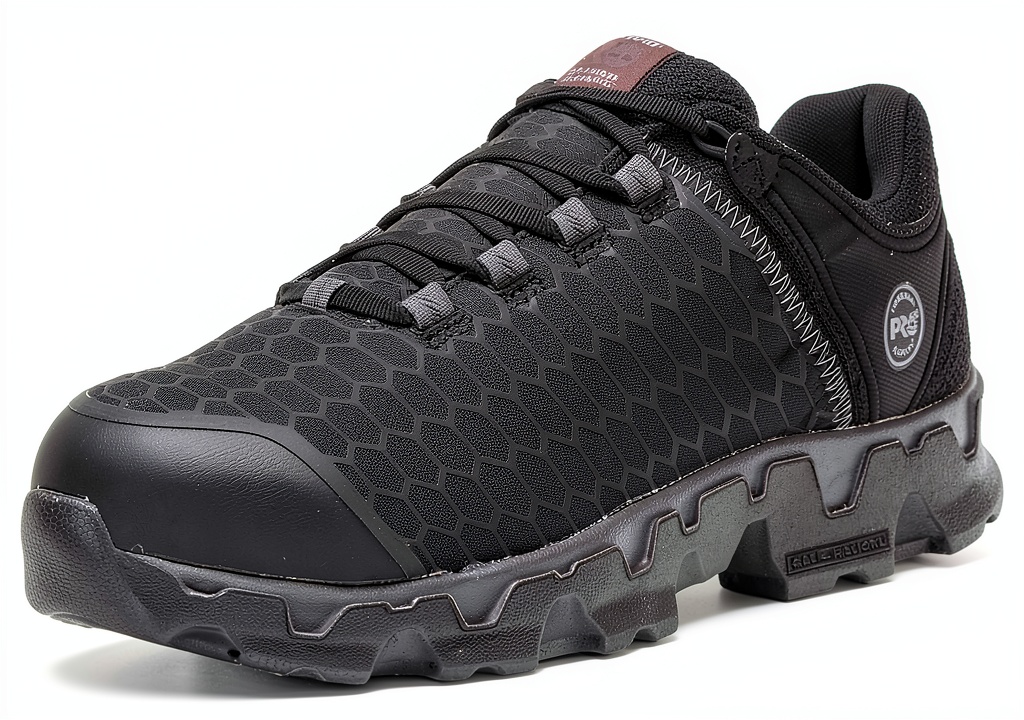
Opening the box, the first thing you notice is how much these resemble high-end athletic shoes rather than traditional work footwear. The synthetic upper combines durable overlays with strategic mesh panels, creating a visual appeal that workers appreciate when heading straight from job sites to casual settings. However, this athletic inspiration comes with trade-offs that become apparent during extended use.
The build quality reflects Timberland PRO’s reputation for durability, but with a focus on lightweight construction. The stitching is consistent throughout, and the materials feel premium to the touch. Where some competitors cut corners on internal reinforcement, the Powertrain Sport maintains structural integrity around high-stress areas like the toe box and heel counter. The gusseted tongue effectively prevents debris entry while maintaining flexibility—a detail that matters when you’re constantly adjusting your footwear throughout the day.
Performance in Real Use
During testing in a distribution center environment, the anti-fatigue technology proved genuinely effective. After consecutive 10-hour shifts on concrete, the difference in lower back and leg fatigue was noticeable compared to standard work shoes. The ESD protection performed reliably when tested with proper contact—something many workers overlook by wearing thick non-conductive socks that compromise the system’s effectiveness.
The alloy toe’s asymmetrical design deserves particular praise. Unlike rectangular steel toes that can create pressure points on the pinky toe during squatting or kneeling, the contoured shape distributes pressure more naturally. In one scenario involving accidental impact from a falling tool, the toe cap performed exactly as specified without transferring excessive force to the foot.
Breathability is both a strength and limitation. The mesh panels provide excellent airflow in temperature-controlled environments, but in outdoor conditions with morning dew or light rain, moisture penetration occurs quickly. This isn’t a fault of the design—it’s a conscious trade-off for breathability that buyers should consider based on their work environment.
Ease of Use
The lace-up system provides secure customization but requires more adjustment time than slip-on alternatives. Workers transitioning from traditional boots might find the fit initially unfamiliar—the athletic last creates a snugger heel and midfoot fit that prioritizes stability over immediate comfort. Breaking in period is relatively short (about 3-5 shifts) compared to leather boots, but the initial fit can feel restrictive for those with wider feet.
Where these shoes excel is in transition scenarios. The lightweight construction and flexible sole make driving between sites more comfortable, and the styling doesn’t look out of place when stopping for groceries after work. The cleaning simplicity is another practical advantage—the synthetic materials wipe clean easily without requiring extensive conditioning like leather alternatives.
Durability & Reliability
After six months of regular use, the shoes show expected wear patterns but maintain structural integrity. The outsole exhibits moderate wear in high-impact areas but retains its grip pattern effectively. The mesh panels show some abrasion marks from repeated contact with ladder rungs, suggesting that workers in extremely abrasive environments might prefer full-grain leather alternatives.
The anti-fatigue footbed maintains its cushioning properties better than expected—many competitors show significant compression within this timeframe. The ESD properties remain consistent based on periodic testing, which is crucial for workers in regulated environments where protection can’t degrade over time.
Pros & Cons
What works exceptionally well:
- All-day comfort on hard surfaces – The anti-fatigue technology genuinely reduces foot fatigue during long shifts
- Lightweight protection – The alloy toe provides safety without the weight penalty of steel
- Excellent breathability – Mesh panels keep feet comfortable in warm environments
- Reliable ESD performance – Properly implemented static dissipation for sensitive environments
- Modern styling – Transitions seamlessly from work to casual settings
Where compromises appear:
- Limited weather resistance – Not ideal for consistently wet conditions
- Narrower fit – May require sizing up for workers with wider feet
- Abrasion concerns – Mesh panels show wear faster in high-friction environments
- Break-in adjustment – Athletic fit feels different from traditional work boots initially
Comparison & Alternatives
Cheaper Alternative: Skechers Workshire Peril Steel Toe
At approximately $30 less, the Skechers option provides basic safety toe protection with decent comfort. However, you sacrifice the ESD protection, the alloy toe for a heavier steel version, and long-term durability. Choose this if budget is primary and you work in dry environments without static sensitivity.
Premium Alternative: Red Wing King Toe XP
Priced about $40 higher, Red Wing’s offering delivers superior abrasion resistance with full-grain leather construction and enhanced waterproofing. The trade-off comes in weight and breathability—these feel more substantial but less athletic. Ideal for heavy construction or consistently wet conditions where maximum durability outweighs comfort priorities.
When to choose each:
- Powertrain Sport: Balanced needs for comfort, light weight, and ESD protection
- Budget option: Basic safety toe requirements with limited environmental challenges
- Premium alternative: Extreme durability needs and harsh working conditions
Buying Guide / Who Should Buy
Best for beginners: New workers entering industrial environments will appreciate the comfortable transition from athletic shoes. The lighter weight and familiar feel help ease the adjustment to safety footwear requirements without the shock of traditional heavy boots.
Best for professionals: Experienced workers who’ve suffered through years of uncomfortable safety shoes will recognize the thoughtful engineering. The combination of legitimate comfort features with proper protection represents a meaningful upgrade from basic compliance footwear.
Not recommended for: Workers in consistently wet environments, those requiring extreme abrasion resistance, or individuals with very wide feet who prefer a roomier toe box. The athletic last and mesh construction make these unsuitable for certain extreme conditions despite their safety ratings.
FAQ
Do these run true to size?
They run slightly narrow compared to traditional work boots. If you have wide feet, consider ordering a half size up. The athletic last creates a snugger fit through the midfoot that some workers need time to adjust to.
How is the waterproof performance?
These are water-resistant but not waterproof. The mesh panels allow moisture penetration in sustained wet conditions. For consistently wet environments, consider Timberland’s waterproof models with sealed construction.
Are they OSHA compliant?
Yes, the ASTM F2413-11 M I/75 C/75 EH rating meets OSHA requirements for impact compression, compression, and electrical hazard protection. Always verify your specific workplace requirements as some environments have additional standards.
How long do they typically last?
With daily use in average industrial conditions, expect 12-18 months of service life. The soles tend to outlast the uppers, with mesh panels showing abrasion before significant cushioning degradation occurs.
Is the anti-fatigue technology noticeable?
Yes, particularly during extended standing on hard surfaces. The difference becomes most apparent after 6+ hours compared to standard insoles. The technology maintains effectiveness better than many cheaper alternatives that compress quickly.